Regional Regulatory Shifts Reshaping Software Supplier Partnerships in Emerging Asian Mobile Markets
Jakob Weber · Aug 22, 2026
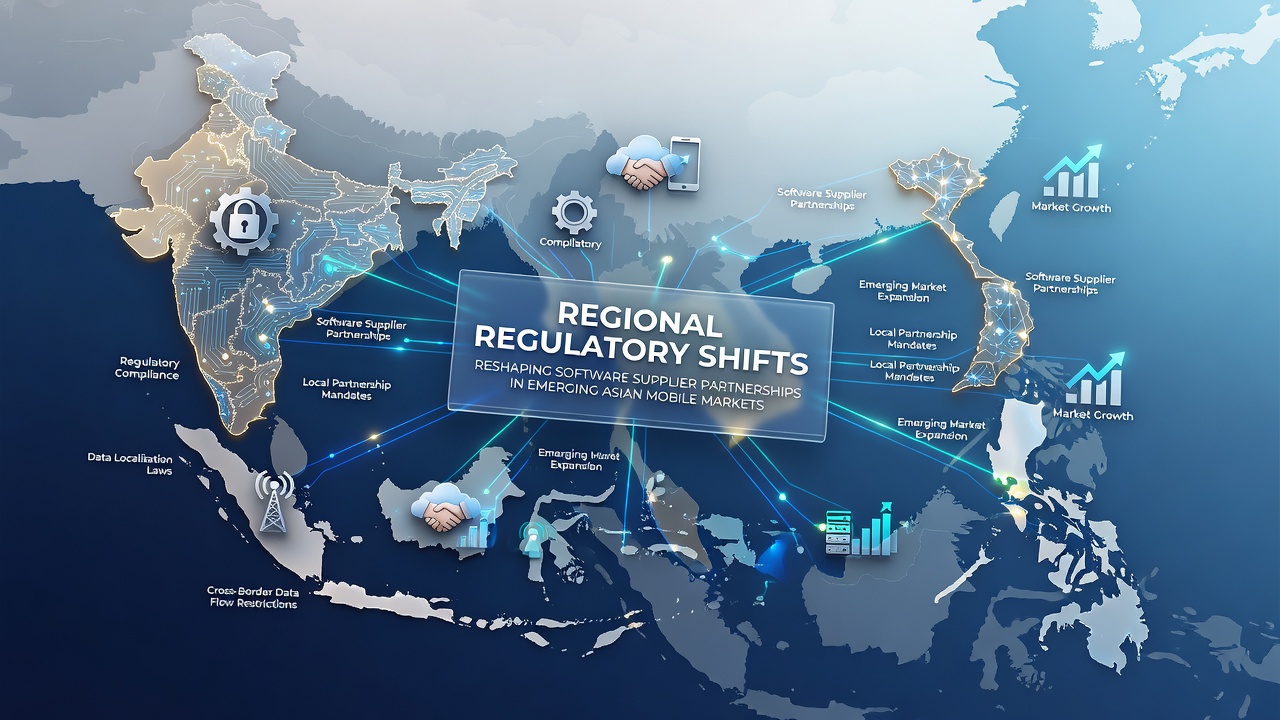
Regional Regulatory Shifts Reshaping Software Supplier Partnerships in Emerging Asian Mobile Markets
Regulatory frameworks across emerging Asian markets have undergone notable adjustments in recent years, and these changes continue to influence how software suppliers form and maintain partnerships with mobile operators and service providers. In August 2026 several jurisdictions introduced updated compliance requirements that directly affect data handling, platform interoperability, and vendor selection processes.
Key Regulatory Developments Across the Region
India's updated data protection rules, which took effect earlier in 2026, require mobile service providers to store certain categories of user information within national borders, while similar localization mandates in Vietnam and Indonesia have prompted software suppliers to establish local processing facilities or partner with domestic cloud providers. Observers note that these requirements have led companies to restructure agreements so that suppliers assume greater responsibility for regional infrastructure compliance.
Philippine authorities released new guidelines in mid-2026 that emphasize transparent data flows between foreign software vendors and local mobile networks, and these guidelines have encouraged suppliers to incorporate audit clauses into existing contracts. Meanwhile, Thailand's electronic transactions commission has expanded its oversight of mobile application security standards, creating additional layers of certification that suppliers must navigate before renewing partnerships.
Shifts in Supplier Selection and Contract Structures
Market participants report that regulatory pressure has accelerated the move toward multi-vendor arrangements, where operators diversify their software dependencies rather than relying on single suppliers. Data from regional industry associations indicate that the average number of active software partners per mobile operator in Southeast Asia rose by 18 percent between 2024 and 2026.
Contract terms now routinely include provisions for rapid compliance updates, and suppliers have responded by embedding dedicated regulatory teams within their client support structures. One study conducted by an academic research group at the National University of Singapore found that 62 percent of surveyed mobile operators revised their supplier agreements at least once during the first half of 2026 to address new reporting obligations.
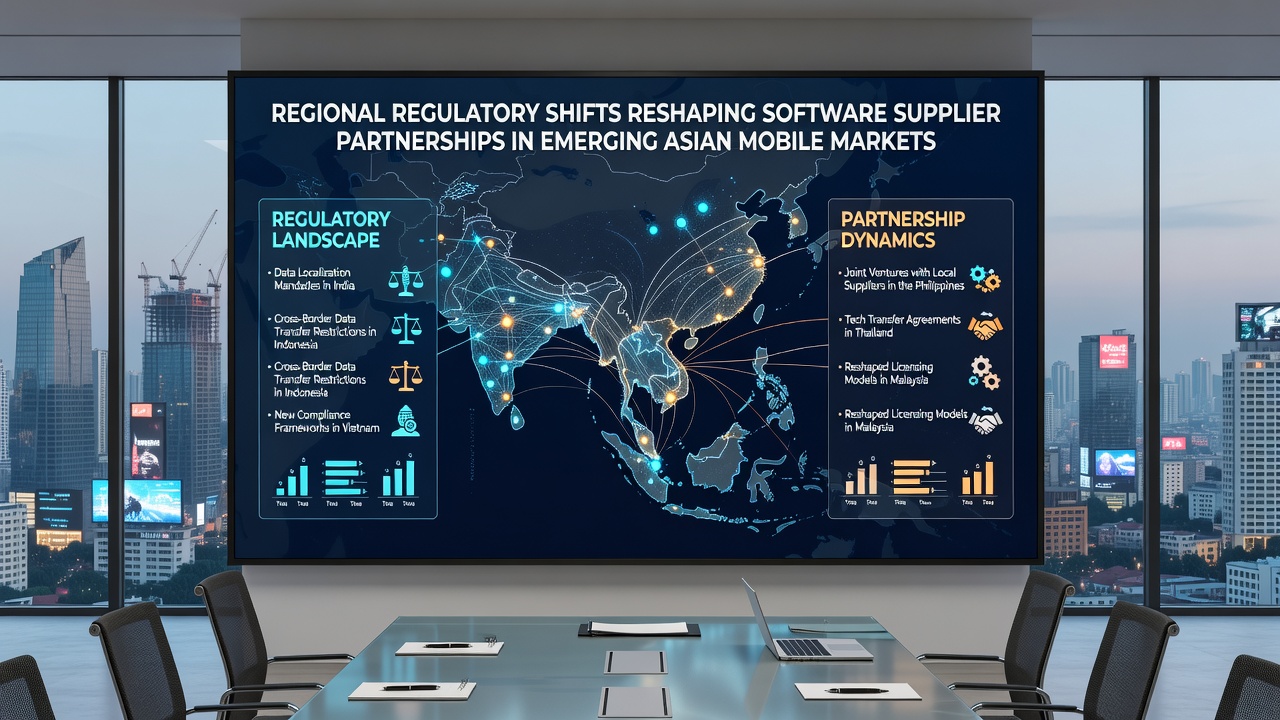
These adjustments extend beyond simple contract language. Suppliers increasingly participate in joint compliance working groups with operators, and some agreements now specify shared liability for regulatory penalties that arise from software-related incidents. Experts at the Asian Development Bank have documented similar patterns in other infrastructure sectors, suggesting that the mobile software segment follows broader trends toward collaborative risk management.
Regional Variations and Their Effects on Partnerships
Differences between markets remain significant. In Indonesia, recent Ministry of Communication and Information Technology directives have prioritized local software development incentives, leading some international suppliers to establish joint ventures with Indonesian firms. In contrast, Malaysian regulators have focused on cross-border data transfer mechanisms, which has encouraged suppliers to adopt standardized encryption protocols that satisfy multiple jurisdictions simultaneously.
India's approach combines strict localization with incentives for domestic innovation, and this combination has prompted several suppliers to expand engineering centers in Bengaluru and Hyderabad. Observers point out that such expansions often coincide with new partnership frameworks that allocate intellectual property rights differently than in previous agreements.
Operational Adjustments by Software Suppliers
Software suppliers have modified their delivery models to accommodate these regulatory environments. Many now offer modular platforms that allow operators to activate or deactivate specific features based on local rules without requiring full system replacements. This flexibility has become a competitive advantage during contract negotiations.
Training programs for operator staff have also expanded, with suppliers providing ongoing education about compliance monitoring tools. Research published by the Economic Research Institute for ASEAN and East Asia highlights that operators who adopted these integrated training components experienced fewer delays during regulatory audits in the first half of 2026.
Conclusion
Regional regulatory shifts continue to drive structural changes in how software suppliers and mobile operators structure their relationships throughout emerging Asian markets. As requirements evolve, partnership models that emphasize shared compliance responsibilities, modular technology, and diversified vendor relationships have gained prominence. Continued monitoring of policy updates across jurisdictions will remain essential for both suppliers and operators seeking to maintain operational continuity.